

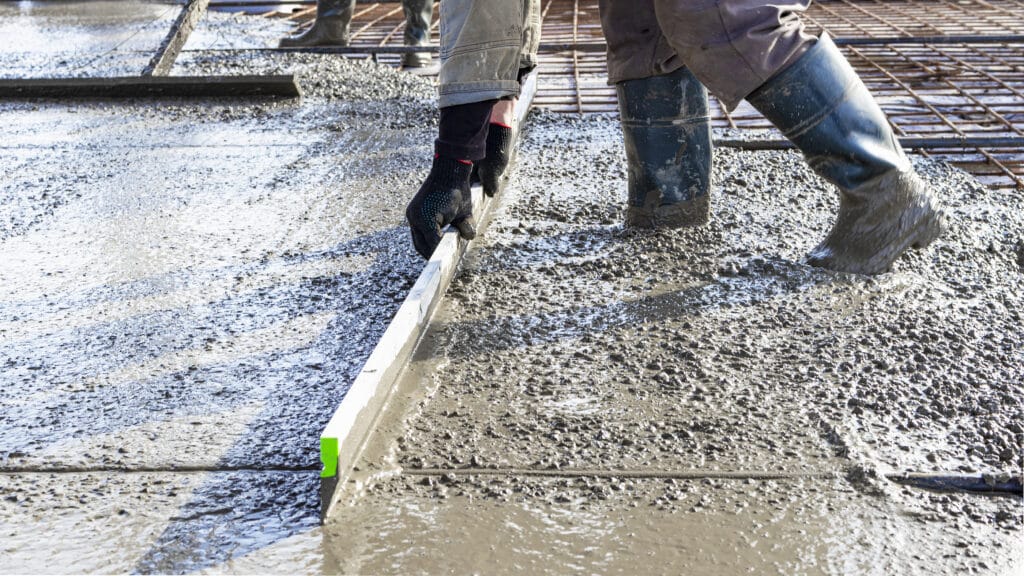
Curing concrete will facilitate its hydration and increase strength, impermeability and resistance to freezing/thawing cycles. Curing also enhances durability and workability.
As concrete slabs Melbourne is placed, excess bleed water rises to the surface for initial curing and can be misted with misting machines for initial misting. A moisture meter is helpful for monitoring how fast its evaporation rate is so that you can take steps to control it.
Strength
Concrete curing is an integral step of construction and should be given as much consideration as possible to ensure maximum lifespan for your finished product. Incorporating formwork early will aid with strength of your concrete; however, other measures can be taken to increase durability of its final form.
Proper curing helps avoid grazing, dusting, surface disintegration and scaling as well as reduce shrinkage, enhance durability and extend long-term performance. Furthermore, proper curing strengthens surface hardness to help defend against abrasion and traffic loads.
Curing should never be underestimated as its neglect can have serious repercussions, ranging from cracking concrete and poor durability, thermal effects such as freezing/thawing cycles and thermal effects that affect its ability to resist freeze/thaw cycles causing costly structural damage and premature project failure if left unaddressed. Therefore it is vital to have an efficient concrete curing system installed at your site for best results.
Durability
As concrete can be used in numerous applications, proper curing is key for its strength and durability. Curing can reduce plastic shrinkage cracking, increase strength, and enhance microstructure of concrete structures.
Curing concrete provides protection from freezing and thawing damage, increases strength, and enhances resistance against scaling and abrasion.
The time it takes for concrete to set depends on its temperature and surrounding humidity as well as any additives added – for instance adding waterproofing agents can shorten this process considerably.
Contractors also employ another method known as “ponding” to ensure concrete cures properly: surrounding it with walls and pouring water over it to keep it hydrated. It is best if this water temperature is kept 20 degrees cooler than that of the concrete to reduce thermal stresses, while it is important that contractors protect their concrete from evaporation by covering it with a waterproof curing sheet.
Workability
An improperly cured concrete will be extremely challenging to work with, failing to withstand thermal effects and resist abrasion while remaining weak against weathering and frost damage.
Curing concrete is crucial in order to form a secure bond among its ingredients and delay drying shrinkage, which could otherwise result in cracks. Curing also delays drying shrinkage which could otherwise cause cracks to form within concrete structures.
Curing concrete requires many different strategies, from spraying water onto its surface or ponding in warmer temperatures, to spraying water or using other methods like heat curing.
Burlap, hessian or cotton mats soaked in water can also be used to keep concrete moist during curing; in certain areas straw sprinkled with water may also help cure concrete. Once dry, these coverings must be removed quickly or they may stain the concrete; an alternative approach would be using a curing compound or membrane-formed curing material instead.
Safety
Curing concrete is an integral component of attaining strength and durability in concrete structures. Without proper curing, chemical reactions necessary for hydration cannot take place properly, leading to weaker, less durable concrete structures.
There are multiple methods of curing concrete properly. Ponding involves surrounding it with walls and pumping water over its surface continuously for proper hydration; another way involves spraying mists of water onto it regularly to increase humidity levels.
Wet coverings such as hessian, burlaps, cotton mats or rugs may also help maintain a damp environment for concrete cooling, while insulating blankets may help keep it warm.